 Ozarks Board Up Crew
Emergency Board Up Services in Branson, MO
Ozarks Board Up Crew provides emergency board up services across the Ozarks for homeowners, landlords and businesses. We secure fire-damaged openings, sliding glass doors and compromised entryways after break-ins, storms, vehicle impacts or vandalism. From a single broken window to a full storefront, we cover it all with sturdy plywood that keeps out weather, intruders and further damage until permanent repairs can begin. Contact us for a free quote today.
-
What Goes Into Emergency Board Up
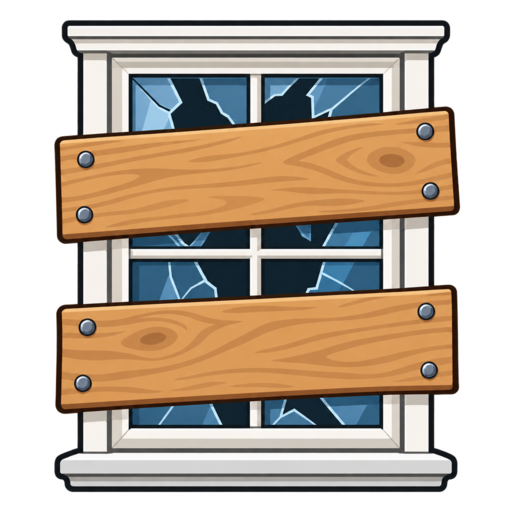
Emergency board up is the temporary sealing of broken windows, smashed doors and breached walls with plywood fastened over the opening, so a damaged building stays closed to weather, intruders and further loss until permanent repairs happen. A shattered pane or a door kicked off its jamb leaves an opening that lets rain soak drywall and flooring, lets cold air freeze pipes, and invites theft from an empty property. Insurance policies commonly expect owners to take reasonable steps to prevent further damage, and an open hole left for days can complicate a claim. Proper boarding covers the whole opening with sheathing that laps onto solid framing, clears loose glass so nobody gets cut later, and protects the edges against water. Taping cardboard or a tarp over a broken window keeps out a breeze for one night. It won't stop a pry bar, a wind gust or a driving rain.
-
Signs You Need Emergency Board Up
Glass on the floor and a gap where a pane used to be is the usual call, often with jagged shards still hanging in the sash. Openings on the ground floor or facing the prevailing weather matter most, since each night they stay open adds water damage and break-in risk.
- Window shattered by a burglar, storm debris or stray baseball
- Door or frame split after a forced entry
- Vehicle crashed into a wall or storefront
- Fire or firefighters' ventilation left windows and roof sections open
- Vacant property with broken glass visible from the street
- Glass cracked across the pane and shifting in the frame
-
Our Emergency Board Up Process
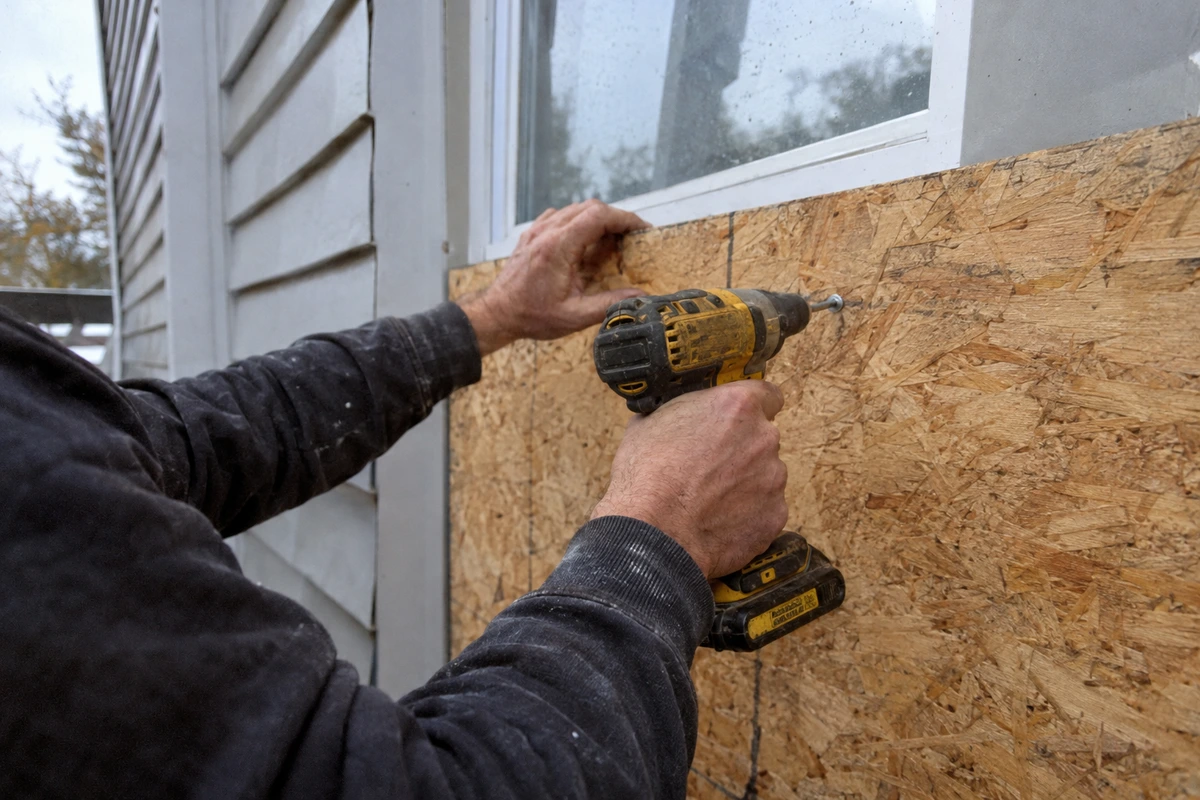
A tape measure across each opening, taken outside to outside of the trim, sets how large every panel needs to be. The crew then walks the building checking for live wires, sagging headers or anything unstable before anyone works near it. Loose shards come out of the sash by hand in cut-resistant gloves, and the floor below gets swept and vacuumed so the glass doesn't get tracked through the house. Plywood is ripped to size on a circular saw, usually on a tailgate or sawhorses, with panels cut to lap a couple of inches onto the surrounding framing. Each panel goes up with screws driven into studs, the header or the window buck, spaced closely enough that the sheet can't be flexed or pried loose. For large storefronts we add horizontal 2x4 strongbacks across the inside or outside face. Doors get screwed shut or fitted with a hinged panel and hasp when the owner still needs access. Last, we push on every sheet, check the edges for gaps, and photograph each boarded opening for the insurance file.
-
Tools and Materials for Emergency Board Up
CDX plywood, usually half-inch to five-eighths thick, is the standard sheet because it holds screws well and handles a few months of rain. Oriented strand board can fill in on interior or short-term openings, but its edges swell faster once wet. Exterior-grade coated screws go in instead of nails, since screws pull out cleanly later with less damage to trim and resist being pried. An impact driver sets those screws quickly into hardwood framing and masonry anchors without stripping heads. On brick or block walls, masonry screws or sleeve anchors take the place of wood screws. Carriage bolts running through the panel to an inside 2x4 brace hold where there's no solid framing near the opening. Polyethylene sheeting and exterior caulk at the top edge help shed water.
-
Can You Do Emergency Board Up Yourself?
The ground-floor window side of the job is homeowner work; anything above a first-story sill or involving structural damage is not. A sound homeowner with a circular saw, a drill, a sheet of plywood and good gloves can cover a broken first-floor window or patio door in an hour or two. The line comes with ladder work on second-story openings, where handling a full plywood sheet on a ladder in wind is a real fall hazard. Storefront glass that's still partly in the frame and heavy laminated or tempered panels need careful removal. Fire or vehicle damage that may have weakened a header or wall belongs with a contractor. Downed or exposed wiring belongs to a licensed electrician.
-
Factors That Change an Emergency Board Up Job
One broken basement window covered with a single panel sits at one end, while a fire-damaged two-story house with a dozen open windows and a vented roof sits at the other. Height and structural condition decide which end a job lands on.
- Number of openings and their total square footage
- Story height and ladder or lift access
- Wall material such as wood frame, brick or block
- Fire, smoke or vehicle damage to framing around openings
- Large storefront glass needing strongbacks and bracing
- Night hours, rain or ongoing storm conditions during work
-
How Long Does Emergency Board Up Take and Last?
A typical emergency board up job runs about one to two hours, usually for a house with one to three broken ground-floor windows. Large commercial fronts, upper-story openings, masonry anchoring and fire scenes with debris and unsafe floors typically stretch the work to half a day or longer. Plywood boarding is a temporary fix, and in most cases it stays in place for a few weeks to a few months while insurance adjusters inspect and glass or doors are ordered. Well-fastened CDX can hold for six months or more, though exposed edges start delaminating with steady rain and sun.
-
Upkeep and Next Steps After Emergency Board Up
Walking around the boarded openings weekly, and again after any heavy storm, matters most, since loose screws, lifted edges and water stains show up long before a panel fails. Vacant properties need that check more often.
- Retighten any screws that have backed out of panels
- Recaulk the top edges when water stains appear inside
- Have a glazier measure and replace broken window glass
- Bring in a carpenter to rebuild split door frames and jambs
- Remove the plywood once permanent windows and doors are installed
-
How Much Does Emergency Board Up Cost in Branson, MO?
Emergency board-up in Branson, MO typically runs $245 to $2,107. A single ground-floor window covered during business hours sits at the low end. Price rises with the number of openings, the total square footage of CDX plywood cut and fastened, and any second-story work that requires tall ladders or a lift. Jobs move toward the top of the range when brick or block walls need masonry anchors, storefront glass needs 2x4 strongbacks, framing is fire-damaged, or the call comes after midnight in driving rain.